
How to Recognize Anxiety in Children

How to Recognize Anxiety in Children
How to Recognize Anxiety in Children
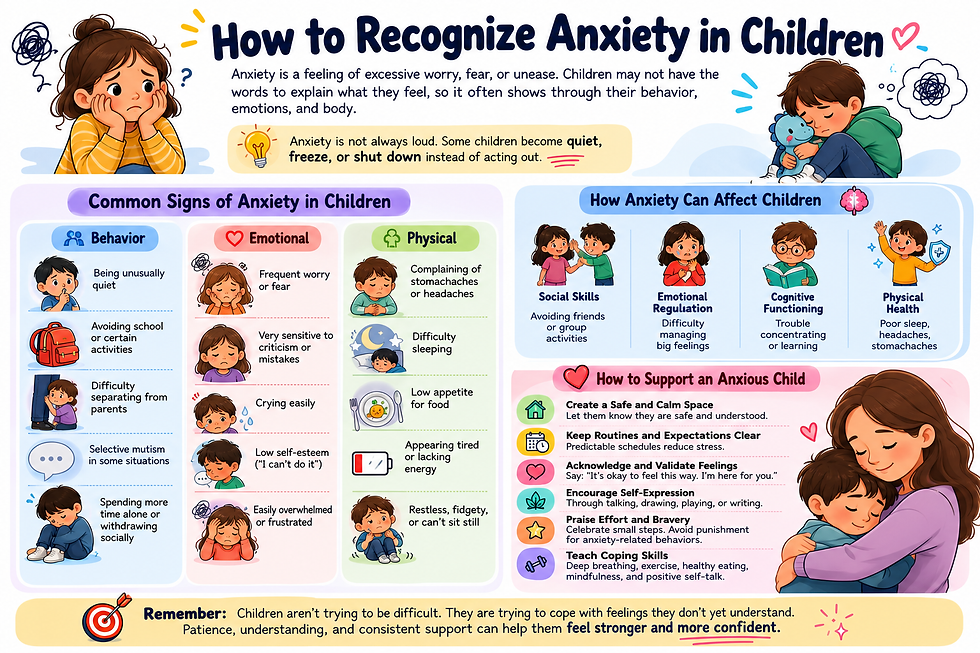
Anxiety in children is not always easy to recognize. Some children can explain that they feel worried, while others show anxiety through changes in behaviour, sleep, appetite, schoolwork or social interaction. When parents, caregivers and educators understand these signs, they can respond with patience, reassurance and practical support.
Many children are sensitive to change, uncertainty or strong emotions. With steady support, they can learn to understand their feelings and build confidence over time.
Anxiety is a strong feeling of worry, fear or unease. It can appear when a child feels unsafe, overwhelmed or unsure about what will happen next.
Anxiety can look very different from child to child. Because children are still developing emotionally, they may not have the words to explain what is happening in their bodies. Instead of saying “I can’t breathe” or “My heart is racing” a child may say “I’m scared to go to school” have difficulty separating from a parent or caregiver, cry often, avoid activities or complain of feeling sick. Paying attention to changes in behaviour, mood and physical symptoms can help adults notice when a child may need extra support.
Common Signs of Anxiety
Children may show anxiety through changes in behaviour, emotions and physical health. These signs can vary depending on the child, the situation and the level of stress they are experiencing.
Behaviour
· Being unusually quiet
· Avoiding school, activities, or social situations
· Difficulty separating from parents or caregivers
· Selective mutism in certain situations
· Becoming easily overwhelmed
· Tantrums or trying to escape stressful situations
· Spending more time alone
Emotional
· Frequent worry or fear
· Being very sensitive to criticism or mistakes
· Crying easily
· Low confidence or low self-esteem
· Difficulty managing emotions
Physical
· Feeling sick or complaining of stomach aches or headaches
· Low appetite
· Difficulty sleeping
· Appearing tired or lacking energy
· Restlessness or fidgeting
How Anxiety May Affect a Child
When anxiety continues over time, it may affect different areas of a child’s daily life and development, including:
- Social skills
- Emotional regulation
- Learning and concentration
- Physical well-being
- Confidence and independence
How to Support an Anxious Child
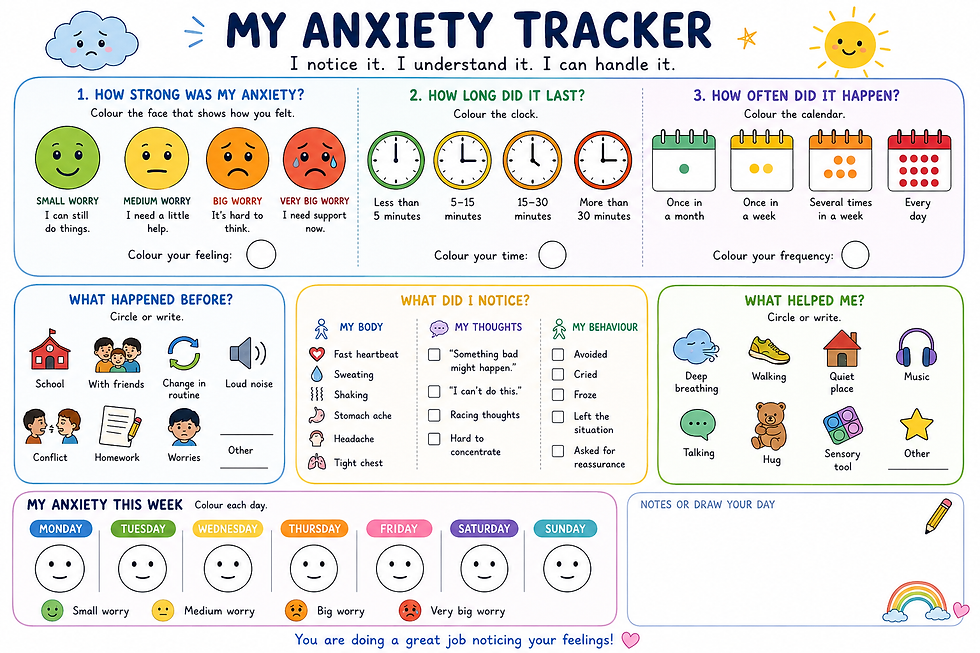
An anxiety tracker helps children recognize how they feel, identify patterns, understand what may trigger anxiety, and discover the coping strategies that help them feel calmer and more confident.
Create a safe, calm space where the child feels comfortable sharing feelings without fear of judgment.
Use predictable routines, clear expectations and visual schedules when possible. A consistent structure can reduce stress by helping the child understand what to expect.
Teach simple coping skills, such as slow breathing, movement breaks, regular meals, enough sleep and asking for help when feelings become too big to manage alone.
With patience, structure and gentle encouragement, adults can help children feel safer, more understood and more confident as they learn to manage anxiety.

Recognizing progress—even small changes—can help build confidence and healthy coping skills.
Note: If anxiety is affecting a child’s daily life, school, sleep or relationships, families may benefit from speaking with a qualified health-care or mental-health professional.

Looking for Support?
Book a free consultation to explore how I can support you or your family.

Comments