
Building Children’s Self-Esteem: Helping Kids Believe “I Can”


Building Children’s Self-Esteem: Helping Kids Believe “I Can”
Building Children’s Self-Esteem: Helping Kids Believe “I Can” Every child carries an inner voice. The words that voice learns to say can shape confidence, resilience, relationships, and the courage to try again.
Picture a child standing in front of something new—a puzzle that feels too hard, a playground full of unfamiliar faces, or a mistake they wish they could undo. In that moment, their inner voice begins to speak. Does it say, “I can try,” or “I’m not good enough”? Self-esteem helps shape that answer. It is not just about feeling good; it is about helping children understand their worth, trust their abilities, and believe they can keep going even when life feels difficult.
The Foundation of Healthy Self-Esteem
· Security: Children need to feel safe, protected, and supported.
· Affiliation: Children need to feel that they belong and are accepted by family, peers, and community.
· Selfhood: Children need space to discover who they are, what they like, and what makes them unique.
· Mission: Children benefit from having goals, purpose, and direction.
· Competence: Children grow stronger when they experience success, solve problems, and see themselves improving.
Think of these five building blocks as the roots of a strong tree. Security tells children, “I am safe.” Affiliation tells them, “I belong.” Selfhood tells them, “I am unique.” Mission tells them, “I have purpose.” Competence tells them, “I can grow.” When these roots are nurtured, children are more likely to stand steady through change, challenge, and disappointment.
What High Self-Esteem Looks Like in Children
· They are more willing to take healthy risks and try unfamiliar tasks.
· They can acknowledge success without depending only on outside approval.
· They are better able to accept failure and ask, “What should I try now?”
· They show motivation, determination, and independence.
· They are more likely to say, “I’ll try,” instead of giving up quickly.
· They can build successful relationships and recognize their own strengths.
· They become internally driven, asking, “What can I do now?”
Healthy self-esteem does not mean children never doubt themselves. It means they have something steady to return to when things go wrong. They may still feel embarrassed after a mistake or frustrated when a task feels hard, but they are more likely to pause, breathe, and try again.
What Low Self-Esteem Can Look Like
· They may become indecisive or avoid making choices.
· They may be unwilling to take risks because they fear failure.
· They may feel powerless, discouraged, or dependent on others for approval.
· They may use negative self-talk, such as “I can’t” or “I give up.”
· They may rely on others to motivate, reinforce, or empower them.
· They may struggle to recognize their own success unless someone else points it out.
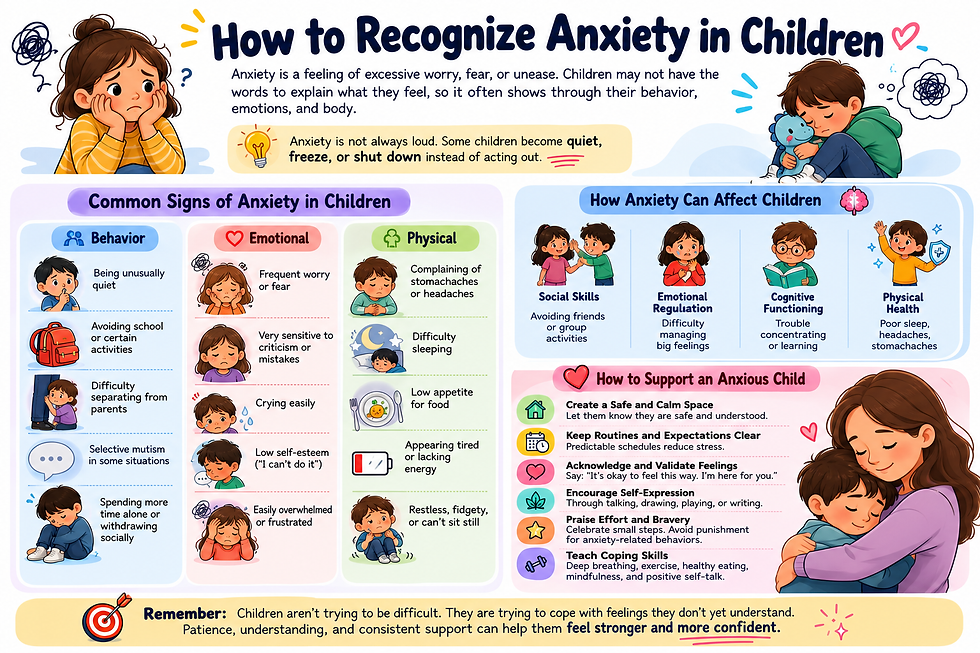
These signs are not labels; they are signals. A child who avoids, resists, or gives up may not be trying to be difficult. They may be showing us that they need more encouragement, safety, practice, or connection.
Behaviours Adults May Notice
· Frustration when tasks feel difficult
· Withdrawal from activities or relationships
· Resistance to trying something new
· Defiance when feeling overwhelmed or unsure
· Daydreaming or disengaging as a way to avoid discomfort
How Adults Can Help Children Build Self-Esteem
Parents, caregivers, and educators do not need perfect words or perfect moments to build a child’s self-esteem. Often, the most powerful support comes through everyday interactions: noticing effort, listening with patience, offering choices, and reminding children that mistakes are part of learning.
· Praise effort, progress, and problem-solving rather than only results.
· Give children age-appropriate choices so they can practise decision-making.
· Let them try, struggle, and learn before stepping in too quickly.
· Use mistakes as learning moments, not as proof of failure.
· Model positive self-talk and resilience in your own everyday life.
· Create safe, loving environments where children feel seen, heard, and accepted.
A simple phrase can make a lasting difference: “That was hard, and you stayed with it.” Words like these help children connect effort with growth and begin to see themselves as capable learners.
Plant the Words They’ll Carry

Self-esteem grows in small, everyday moments: the patient reminder, the encouraging smile, the chance to try again and the words that say “You are safe, you belong and you can grow.” When adults plant those messages early and often, children begin to carry them as their own. So the next time a child says “I can’t” see it as an invitation—not to rescue them, but to remind them of what is already growing inside: courage, capability and the quiet power to say “I can try.”

Self-esteem isn't built through praise alone. It grows when children feel safe, connected, valued, purposeful and capable. Understanding these foundations helps us guide children with compassion while building skills that last a lifetime.
Building self-esteem is not about telling children they are amazing all the time. It is about teaching them the skills to believe in themselves, helping them learn from mistakes and giving them opportunities to experience success through effort and perseverance. Small moments, repeated over time, create the confidence children carry with them throughout life.
Comments