

Rethinking Breathing Techniques for Anxiety Support Through Engaging Activities

Updated: Jun 5
Rethinking Breathing Techniques for Anxiety Support Through Engaging Activities
Rethinking Breathing Techniques for Anxiety Support Through Engaging Activities - Anxiety often brings a flood of physical sensations, with breathing changes among the most noticeable. Many therapists and counselors encourage clients to pause and take deep breaths to calm the nervous system. While this method is common, it can sometimes backfire. Instead of easing anxiety, repeated breathing prompts may increase frustration or heighten awareness of breathing in a way that worsens symptoms. This post explores why focusing directly on breathing can be counterproductive and offers a more effective, activity-based approach to support anxiety regulation.
Anxiety is a common challenge that many people face. Often, when anxiety strikes, the advice given is simple: “Let’s pause and take a deep breath.” This advice is meant to help calm the nervous system and bring a sense of control. It is widely used in therapy and counseling settings. But for some, this approach can backfire.
Taking a deep breath sounds easy, but for many, it can increase frustration and make anxiety worse. This article explores why focusing too much on breathing can sometimes intensify anxiety. It also offers a fresh, activity-based approach that helps the body regulate naturally without forcing the breath.
Why Traditional Breathing Prompts Can Be Problematic
The typical advice to “take a deep breath” aims to help clients regulate their nervous system and reduce anxiety. However, for some individuals, especially those with heightened anxiety, this direct focus on breathing can create unintended effects:
Increased frustration when clients feel unable to breathe “correctly”
Intensified focus on breathing which can feel unnatural or forced
Reinforcement of the thought “I cannot breathe” which fuels anxiety
Over-control of breathing patterns, leading to heightened anxiety instead of calm
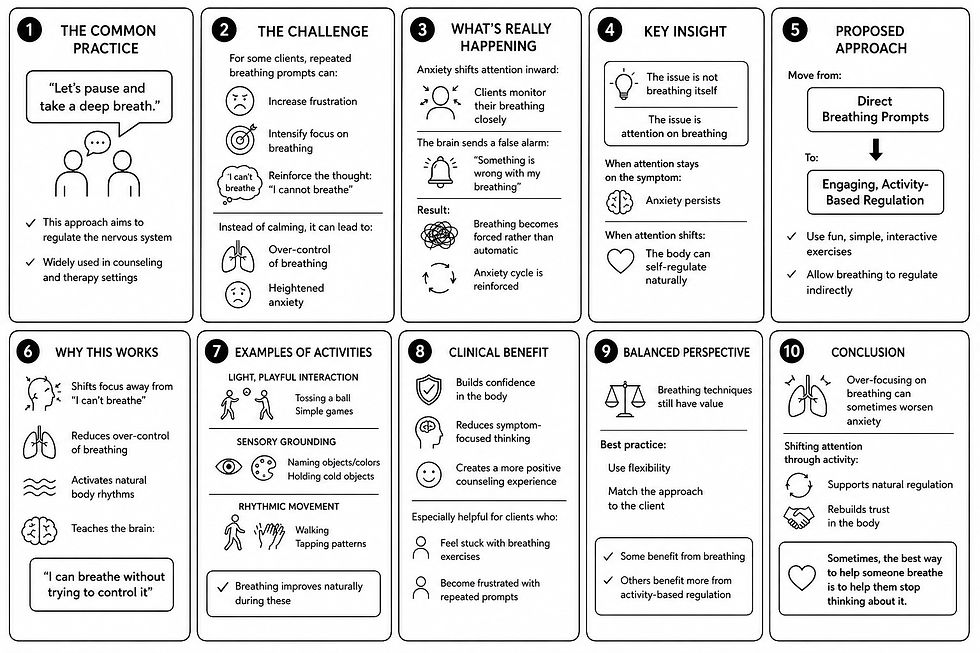
When anxiety is high, the brain’s attention shifts inward, causing clients to monitor their breathing closely. This hyper-awareness can trigger a false alarm in the brain, signaling that something is wrong with the breath. As a result, breathing becomes forced rather than automatic and the anxiety cycle continues.
Abstract
Background: Breathing-focused interventions are commonly employed in the management of anxiety and panic-related symptoms. While these strategies are often effective, emerging observations suggest that they may not be universally beneficial and in some cases may contribute to increased distress.
Objective: This perspective explores the potential limitations of direct breathing prompts in individuals experiencing heightened anxiety and proposes an alternative, attention-shifting approach to support physiological regulation.
Conceptual Analysis: During acute anxiety, individuals often exhibit increased interoceptive awareness, particularly toward respiratory sensations. Directing attention toward breathing in such contexts may amplify self-monitoring and reinforce maladaptive cognitions (e.g., perceived inability to breathe), thereby exacerbating physiological and psychological dysregulation. Conversely, engagement in structured, non-threatening activities may facilitate an external attentional shift, reducing symptom-focused awareness. This shift allows autonomic processes, including respiration, to regulate more naturally without conscious control.
Implications: Activity-based and engagement-focused strategies may offer a complementary or alternative approach to traditional breathing interventions, particularly for individuals who experience increased distress with direct breath-focused techniques. These findings underscore the importance of flexible, individualized interventions that consider attentional processes in anxiety regulation.
Conclusion: Shifting attentional focus away from breathing and toward engaging activities may support more effective autonomic regulation in certain individuals with anxiety, highlighting a need for further empirical investigation.

The Common Practice and Its Challenges
When someone feels anxious, the usual response is to encourage them to slow down and breathe deeply. This method aims to regulate the nervous system and bring calm. It is simple and easy to remember, which is why it is so popular.
But this approach does not work for everyone. Some clients find repeated breathing prompts frustrating. Instead of calming down, they become more focused on their breath. This can lead to thoughts like “I cannot breathe” which only increase anxiety.
Trying too hard to control breathing can make it feel forced. When breathing is no longer automatic, anxiety can grow stronger. This happens because the brain starts to send false alarms, telling the person that something is wrong with their breathing.

Focusing too much on breathing can sometimes increase anxiety instead of reducing it.
What’s Really Happening Inside
Anxiety causes the mind to turn inward. Instead of focusing on the outside world, the person starts to watch their own breathing closely. This inward focus can create a false sense of danger.
The brain may send signals that something is wrong with the breath, even when it is not. This false alarm causes the person to try harder to control their breathing. The result is a cycle where breathing becomes forced and anxiety grows.
The key insight is that the problem is not the breathing itself. The problem is the attention placed on the breathing. When attention stays fixed on the symptom, anxiety continues. But when attention shifts away, the body can regulate itself naturally.
Understanding the Role of Attention in Breathing and Anxiety
The core issue is not breathing itself but the attention placed on breathing. When clients fixate on their breath as a symptom, anxiety tends to persist. On the other hand, when attention shifts away from the symptom, the body can regulate itself more naturally.
This insight suggests that the goal should be to help clients redirect their focus rather than instruct them to control their breathing directly. By doing so, the nervous system can settle without the added pressure of conscious breath control.
Engaging Through Connection: Tailoring Regulation Strategies to Individual Needs

When someone feels overwhelmed or unsettled, the common advice is to pause and take a deep breath. But what if that approach doesn’t work for everyone? What if asking someone to “just calm down” actually makes them feel more disconnected or misunderstood? Observing behavior, nervous system states, communication styles and individual strengths can reveal better ways to support regulation. This post explores how engaging people through connection and personalized strategies leads to more natural and lasting regulation.
Understanding Regulation Beyond Breathing Exercises
Many regulation techniques focus on controlling breath or pausing to reset. These methods can work well for some but may feel forced or ineffective for others. When someone speaks rapidly, repeats stories or seems increasingly dysregulated, it signals their nervous system is in a heightened state. Simply telling them to “take a breath” might not address the root cause or help them feel safe.
Instead, regulation can happen more naturally when the person feels engaged and understood. This means tuning into their unique nervous system needs and communication style. For example:
Someone who is highly sensory-oriented might benefit from a tactile object or rhythmic movement.
A person who processes emotions through storytelling might find comfort in sharing their experience while gently guided.
Others may respond best to quiet, focused activities like drawing or organizing objects.
The key is to observe and respond, not to impose a one-size-fits-all solution.
Observing Behavior and Nervous System States
Before introducing any regulation strategy, it’s important to gather information through observation. Look for signs such as:
Changes in speech pace or tone
Repetitive stories or phrases
Physical restlessness or stillness
Facial expressions and eye contact
Body posture and muscle tension
These clues help identify whether the person is in a fight, flight, freeze or shutdown state. Each state requires different approaches. For example, someone in a fight or flight state might need grounding through movement or sensory input, while someone in shutdown might benefit from gentle engagement or quiet presence.
Moving Toward an Activity-Based Approach
Instead of direct breathing prompts, therapists can use engaging, activity-based regulation techniques. These involve fun, simple and interactive exercises that allow breathing to improve indirectly. Activities that shift attention away from the breath help clients relax and regain natural breathing rhythms without overthinking.
This approach uses light, playful interaction, sensory grounding and rhythmic movement. These activities help the body find its natural rhythm without forcing the breath.
Why This Works
They move focus away from the thought “I can’t breathe”
It reduces the urge to over-control breathing.
It activates natural body rhythms and promote relaxation
It teaches the brain that breathing can happen without conscious effort.
Building Connection Through Shared Activities
Rather than stopping the conversation abruptly, inviting the person into an activity can create a safe space for regulation. Activities that involve movement, sensory experiences or creative expression can help shift nervous system states without pressure.
Some examples include:
Sensory grounding: Naming objects or colors in the room; holding a cold object or a smooth stone; squeezing a stress ball or feeling textured fabrics helps bring attention to the present moment and away from anxious thoughts and can provide calming input.
Light, playful interaction: Tossing a ball back and forth or playing simple games can distract the mind and encourage natural breathing.
Creative outlets: Drawing, coloring, or arranging objects can focus attention and promote relaxation.
Rhythmic movement: Walking at a steady pace or tapping patterns with fingers or feet can create a rhythm that supports natural breathing. Clapping, drumming or humming a simple tune can synchronize nervous system rhythms. Walking slowly, gentle stretching or rhythmic tapping can help release tension.
Shared interests: Engaging in a hobby or topic the person enjoys can redirect focus and build trust.
Simple games: Activities like “Simon Says” or rhythmic clapping patterns engage attention and promote coordination.
These activities allow regulation to happen alongside connection, rather than as a separate task and allow breathing to improve without direct focus. They also help build confidence in the body’s ability to self-regulate.
Clinical Benefits of Activity-Based Regulation
This approach offers several advantages in therapy:
Builds confidence in the body’s ability to self-regulate
Reduces symptom-focused thinking that can trap clients in anxiety loops
Creates a more positive and engaging counseling experience
Especially helpful for clients who feel stuck or frustrated with traditional breathing exercises
By incorporating these activities, therapists can help clients develop new ways to manage anxiety that feel less stressful and more empowering.
Working From Strengths and Interests
Every person has unique strengths and preferences that influence how they regulate emotions. Tailoring strategies to these strengths increases the likelihood of success. For example:
A person who loves music might find comfort in listening to or creating rhythms.
Someone who enjoys nature might benefit from spending time outdoors or using natural objects.
A person with strong verbal skills might prefer talking through feelings while engaged in a calming activity.
By focusing on what the individual already values and responds to, regulation becomes a collaborative process rather than a directive.
Practical Tips for Tailoring Regulation Strategies
Here are some actionable steps to apply this approach:
Start with observation: Spend time noticing how the person behaves and communicates when calm and when dysregulated.
Ask gentle questions: Invite the person to share what helps them feel better or what they enjoy.
Offer choices: Provide options for activities or sensory experiences rather than insisting on one method.
Stay flexible: Be ready to shift strategies if something isn’t working.
Build trust: Prioritize connection over control; regulation happens best when the person feels safe and understood.
Use natural transitions: Introduce activities as part of the conversation, not as interruptions.
Case Example: Supporting a Dysregulated Teen
A teenager in a group setting starts speaking rapidly and repeating the same story. Instead of stopping them and saying “calm down” the facilitator invites the teen to join a drawing activity nearby. While the teen draws, the facilitator listens and gently asks questions about the story. The teen’s nervous system begins to settle as they focus on the creative task and feel heard.
Key mechanism: Attentional shift → Reduced symptom focus → Natural regulation
Direct prompts to regulate breathing may increase internal focus and distress in some individuals.
In contrast, redirecting attention through structured activity (e.g., drawing) supports external engagement, allowing autonomic processes to regulate more naturally.
This shift in attention reduces self-monitoring and provides conditions for spontaneous nervous system stabilization.

Clinical Benefits of Activity-Based Regulation
This approach offers several benefits in therapy:
Builds confidence in the body’s ability to self-regulate
Reduces symptom-focused thinking that can trap clients in anxiety loops
Creates a more positive and engaging counseling experience
This method is especially helpful for clients who feel stuck with traditional breathing exercises or become frustrated with repeated prompts. These activities can help clients develop new ways to manage anxiety that feel less stressful and more empowering.

Integrating Products for Support
In practice, some tools can support this activity-based approach. For example, Lavardi Sanctuary offers life skills coaching and behavioral support that includes sensory and movement-based strategies tailored to individual needs.
One supportive resource is the Sensory Grounding Kit. This kit includes cold objects, textured items and color cards that help clients focus on sensory experiences rather than their breath. Using this kit during sessions can gently guide clients into a calmer state without direct breathing prompts.
Another helpful service is the Rhythmic Movement Activity. This session teaches simple movement patterns and tapping exercises that clients can use anytime to support natural breathing and reduce anxiety.
These tools fit well with the activity-based approach by providing practical ways to shift attention and support natural regulation.
Balancing Breathing Techniques and Activity-Based Methods
Breathing techniques still have value. Some clients benefit from direct breathing exercises, especially when they feel comfortable with them. The best practice is to remain flexible and match the approach to each person’s needs.
For some, a combination of breathing and activity-based regulation works best. For others, focusing on activities that engage the body and senses is more effective.

Walking can be a simple, natural way to support breathing and reduce anxiety.
Breathing techniques still have value, especially when clients are ready to explore them without pressure. The key is to balance direct breathing exercises with activities that promote natural regulation. This combination can help clients gradually build comfort with their breath while reducing anxiety. Focusing too much on breathing can sometimes make anxiety worse. Shifting attention through simple activities helps the body regulate naturally. This approach rebuilds trust in the body and reduces the pressure to control breathing.
Sometimes, the best way to help someone breathe is to help them stop thinking about it. Observing a person’s behavior, nervous system state and strengths before introducing regulation strategies is key.
If someone seems overwhelmed or unsettled, it is better to invite them into an activity, movement or sensory experience. This keeps the connection alive and allows regulation to happen naturally.
Working from the individual’s strengths and interests creates a more supportive and effective path to managing anxiety.
Therapists should assess each client’s response and tailor interventions accordingly. For some, starting with engaging activities can open the door to more focused breathing work later on.
Helping clients with anxiety requires flexibility and creativity. Moving beyond repeated breathing prompts to include engaging, activity-based approaches offers a promising path. These techniques shift attention away from anxious symptoms and support the body’s natural ability to regulate itself. For anyone working with anxiety, trying playful, sensory and rhythmic activities can make a meaningful difference in how clients experience and manage their breath and anxiety.
This article is for informational purposes only and does not replace professional medical advice.
For more information on holistic life skills coaching and behavioral support, visit Lavardi Sanctuary. Sessions offer tailored strategies that help individuals build confidence and manage anxiety in natural, supportive ways.
Explore Related Resources
Book a 30-minute consultation to explore your needs, goals, and available supports in a safe and supportive environment.
With care, xo Livia 🌸
Comments